Cross-Platform Design System & Development Boilerplate
Built a scalable design system that enables rapid white-label deployments with flexible client customization and zero additional development effort.
Design Leadership
Enterprise UI/UX
Customization
Design System
iOS, Android, Web
White-Labal
Accessibility
Role
Co-lead designer
Company
Hacon – A Siemens Company
Building a Scalable Design System for a Global Mobility Ecosystem
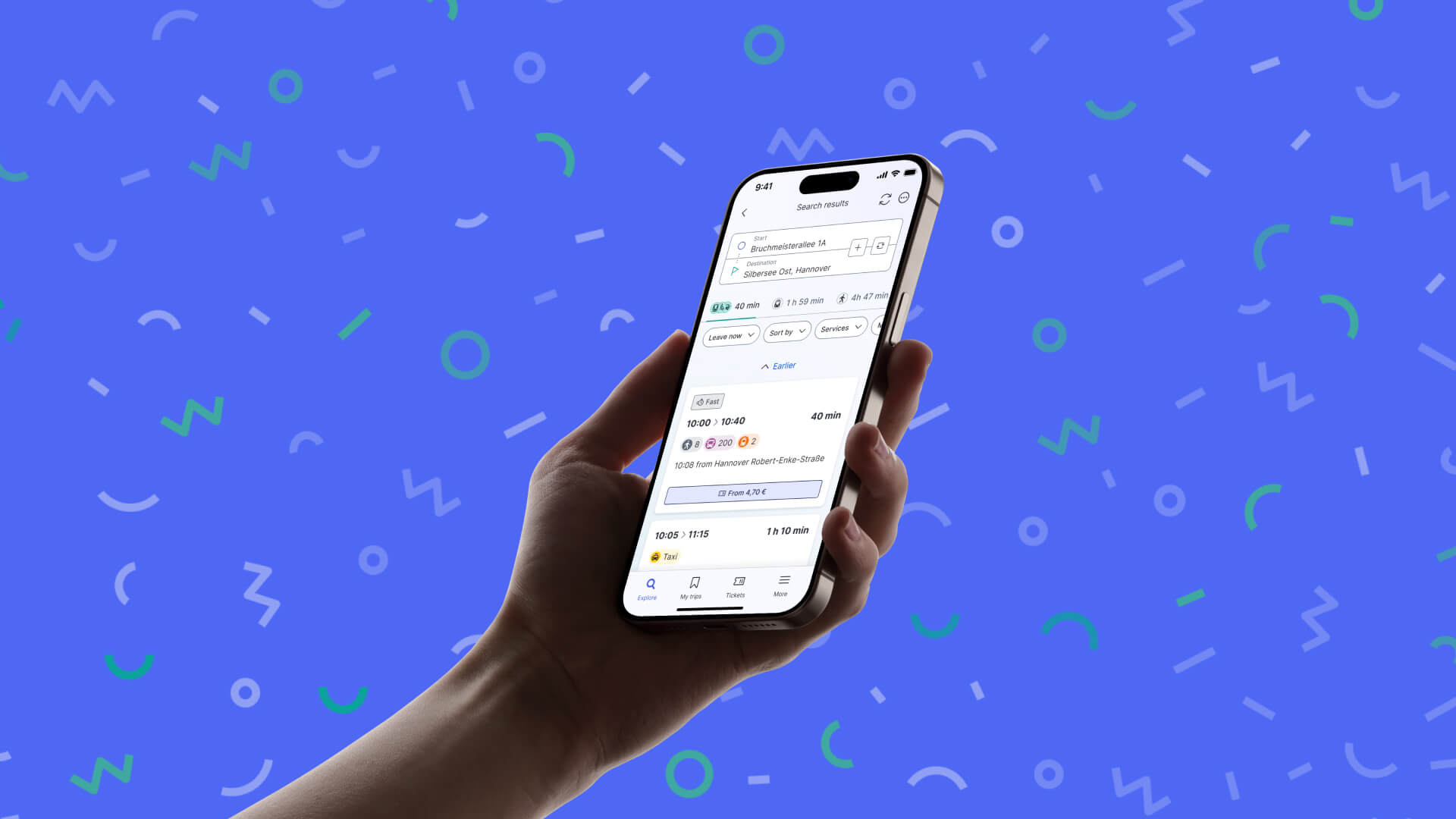
I led the creation of a cross-platform design system for Siemens Mobility’s MaaS ecosystem, powering multimodal journey planning, booking, and ticketing for over 200M downloads.
Laying the Foundation for Consistency, Efficiency, and Customization at Scale
The Goal
Design and implement a scalable, customizable design system that empowers product teams to deliver consistent, accessible, and brand-aligned experiences—while significantly reducing design and development effort.
TL;DR — S.O.A.R.
Situation
The white-label mobility platform was scaling rapidly but struggling with fragmented UX, redundant design efforts, and a lack of customization flexibility for clients.
Objective
Create a unified, accessible, and scalable design system and boilerplate to reduce development time, enable brand customization, and improve product consistency.
Action
I co-led the design system strategy, merged existing UI frameworks, and developed a flexible component library with design tokens. I collaborated closely with devs to build a modular boilerplate and created robust documentation to streamline handoff and onboarding.
Result
Faster time to market, reduced maintenance effort, and improved internal efficiency. The system empowers clients to easily brand their apps while ensuring design consistency and scalability across platforms.
Outcome
Accessible, Scalable and Customizable Design System on all Platforms
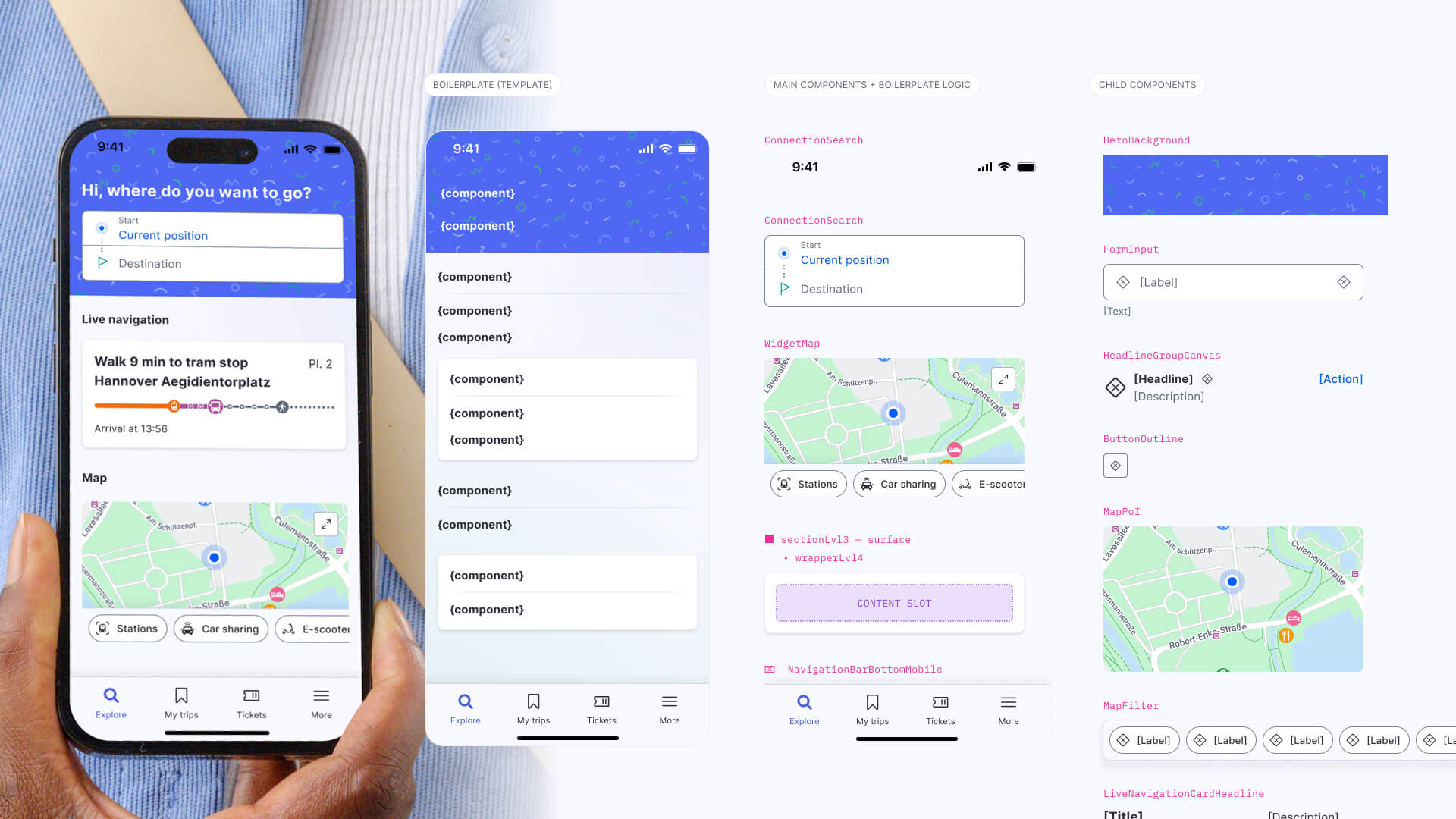
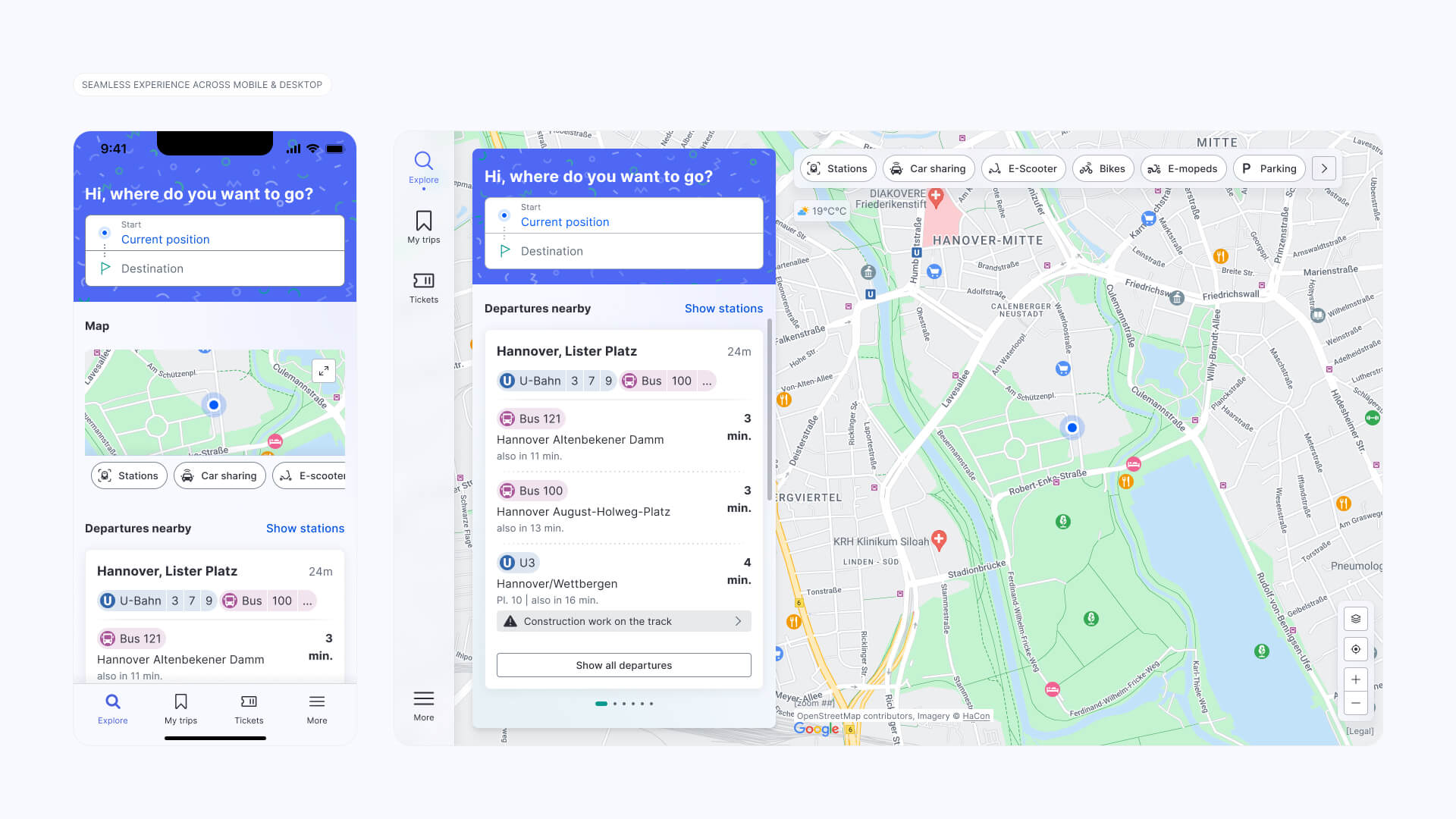
The scalable design system provides a flexible, customizable foundation for efficient app deployments across iOS, Android, and Web. Clients can easily adjust branding without extra development, while modular components ensure consistency and accessibility. The system accelerates time to market, reduces maintenance, boosts client satisfaction, and improves internal efficiency.
The Core
A Boilerplate as the Backbone
More about outcome
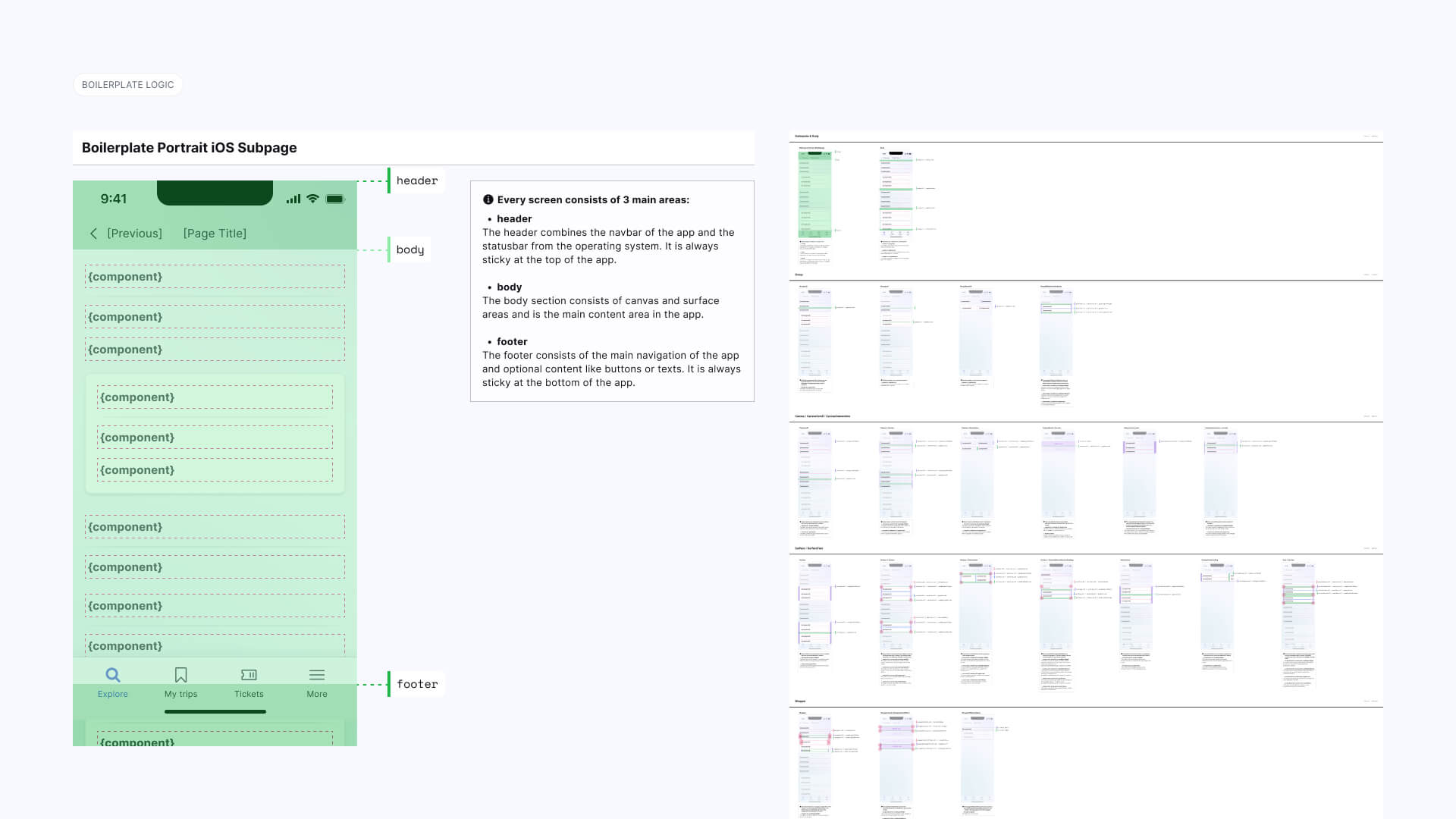
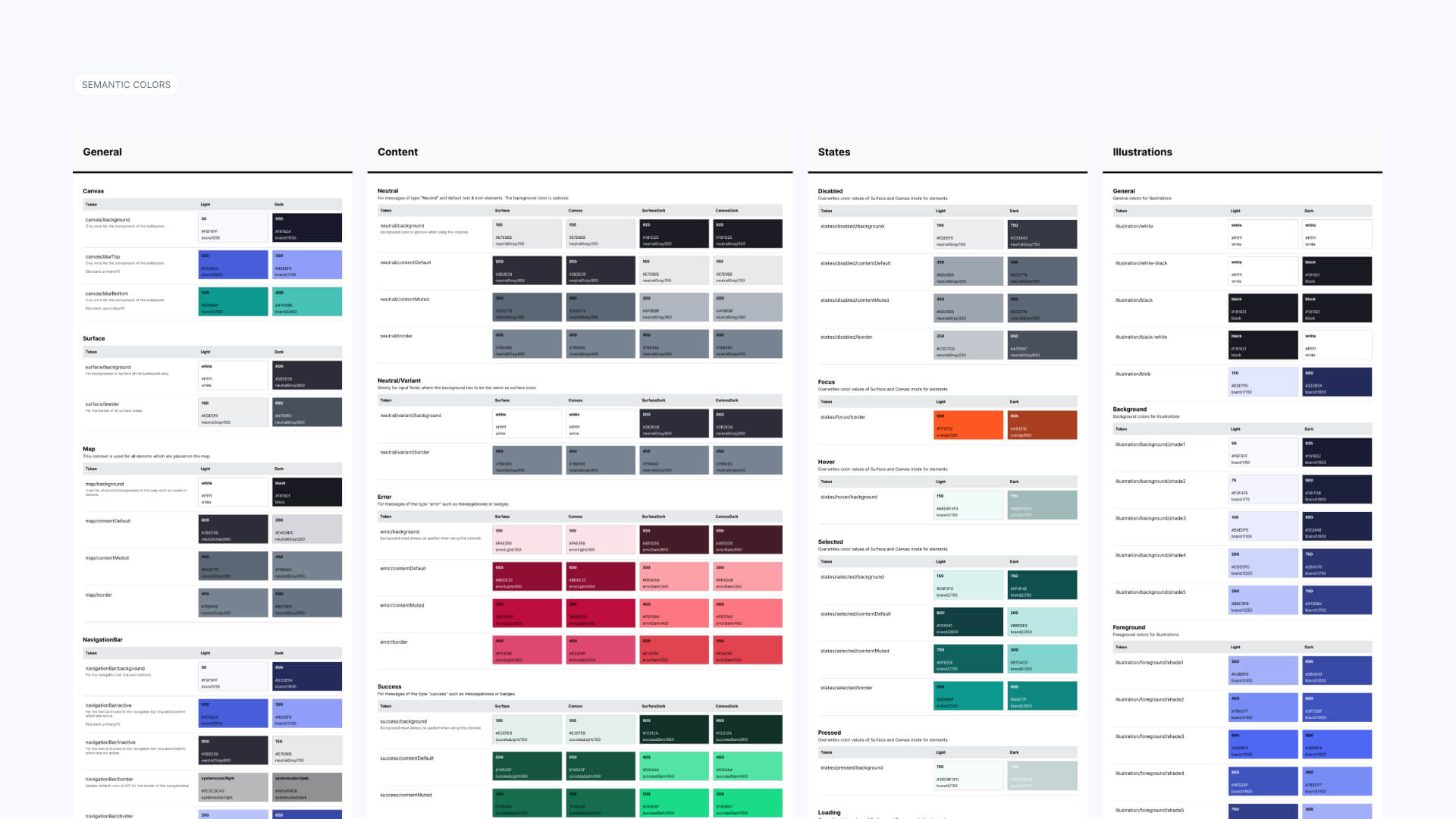
The scalable design system we created includes a ready-to-use boilerplate framework, offering a consistent, accessible, and efficient foundation for app deployments across iOS, Android, and Web. Clients can easily customize branding elements like colors, fonts, and icons without extra development, while flexible, modular components allow for layout and style changes without compromising design integrity.
Key Benefits
- Faster Time to Market:
Rapid app deployments with streamlined client rollouts. - Enhanced Customization:
Clients control branding and design, reducing developer involvement and costs. - Cross-Platform Consistency:
Seamless experience across platforms ensures consistency. - Built-in Accessibility:
WCAG-compliant components ensure inclusivity from the start.
Reduced Maintenance Overhead: Streamlined updates simplify maintenance, saving time. - Higher Client Satisfaction:
Greater flexibility and ease of customization lead to improved retention and adoption. - Internal Efficiency Gains:
Comprehensive documentation and modular libraries accelerate implementation and cross-team collaboration. - Future Growth:
This is just the beginning—the design system will continuously evolve to become more efficient, customizable, and easier to use and maintain.
This design system is poised to empower clients with greater autonomy while boosting internal efficiency, supporting the company’s growth, and setting the stage for future success.
Role
Co-Lead, Design System Execution, and Project Management for Scalable Delivery
Co-created a scalable design system and development boilerplate for a global mobility platform. Focused on seamless design-development integration to enable fast, cost-efficient white-label app rollouts. Led strategy, component design, customization frameworks, and early cross-team coordination.
More about my role
Co-created a scalable design system and development boilerplate for a global mobility platform. Focused on seamless design-development integration to enable fast, cost-efficient white-label app rollouts. Led strategy, component design, customization frameworks, and early cross-team coordination.
Key Contributions
- Design System & Boilerplate Strategy
Co-led the strategy and architecture of a unified design system tightly integrated with a development boilerplate, ensuring consistency, scalability, and rapid deployment across iOS, Android, and web. - Boilerplate & Component Synergy
Collaborated with developers to co-create a modular boilerplate that worked hand-in-hand with the Figma component library, allowing for efficient implementation of white-label apps with minimal rework. - Customizable Design Tokens & Framework
Defined flexible design tokens and configuration options, enabling clients to easily adapt branding (colors, typography, icons) without additional development effort. - Component Library & Modular System
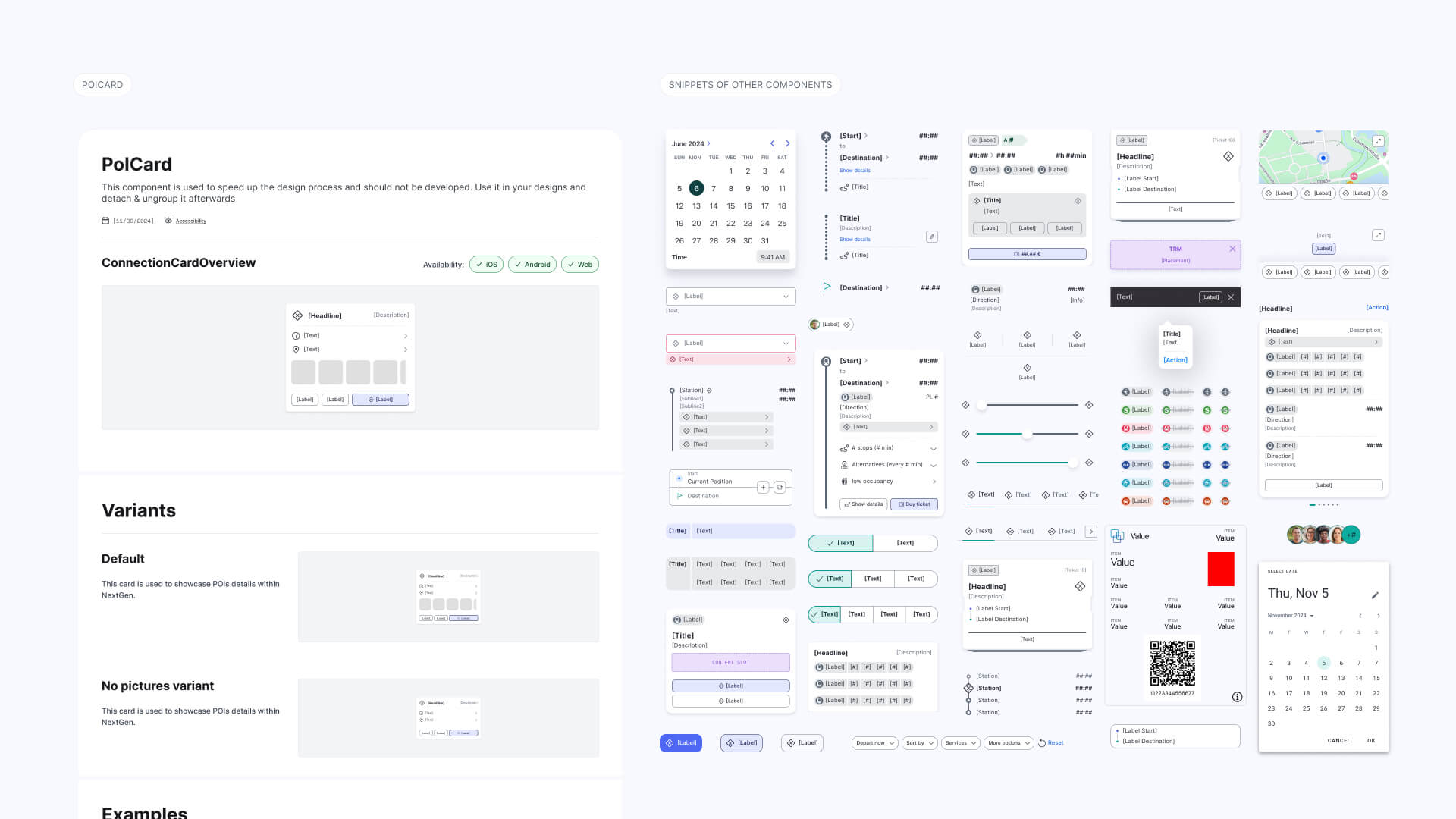
Built a scalable, cross-platform component library in Figma, ensuring visual and functional consistency while allowing for layout and style variations to meet diverse client needs. - Accessibility & Cross-Platform Consistency
Ensured all components were designed to meet WCAG standards, with a consistent user experience across iOS, Android, and web platforms. - Prototyping & Validation
Created prototypes of core components and customization workflows to validate the system with internal stakeholders and select clients before full rollout. - Documentation & Developer Handoff
Produced comprehensive Figma libraries and component-level guidelines, streamlining design handoff and ensuring developers could implement the system efficiently. - Project Coordination
During the first phase of the project, I co-led coordination efforts with my design co-lead—managing timelines, resources, and cross-team communication to ensure alignment between design and development teams until formal product and design leadership were established.
This role required balancing strategic thinking, hands-on design execution, and cross-functional collaboration to deliver a design system and boilerplate that dramatically reduced time-to-market, minimized maintenance, and empowered clients with greater autonomy.
Problem
Overcoming Inconsistencies and Scaling Challenges
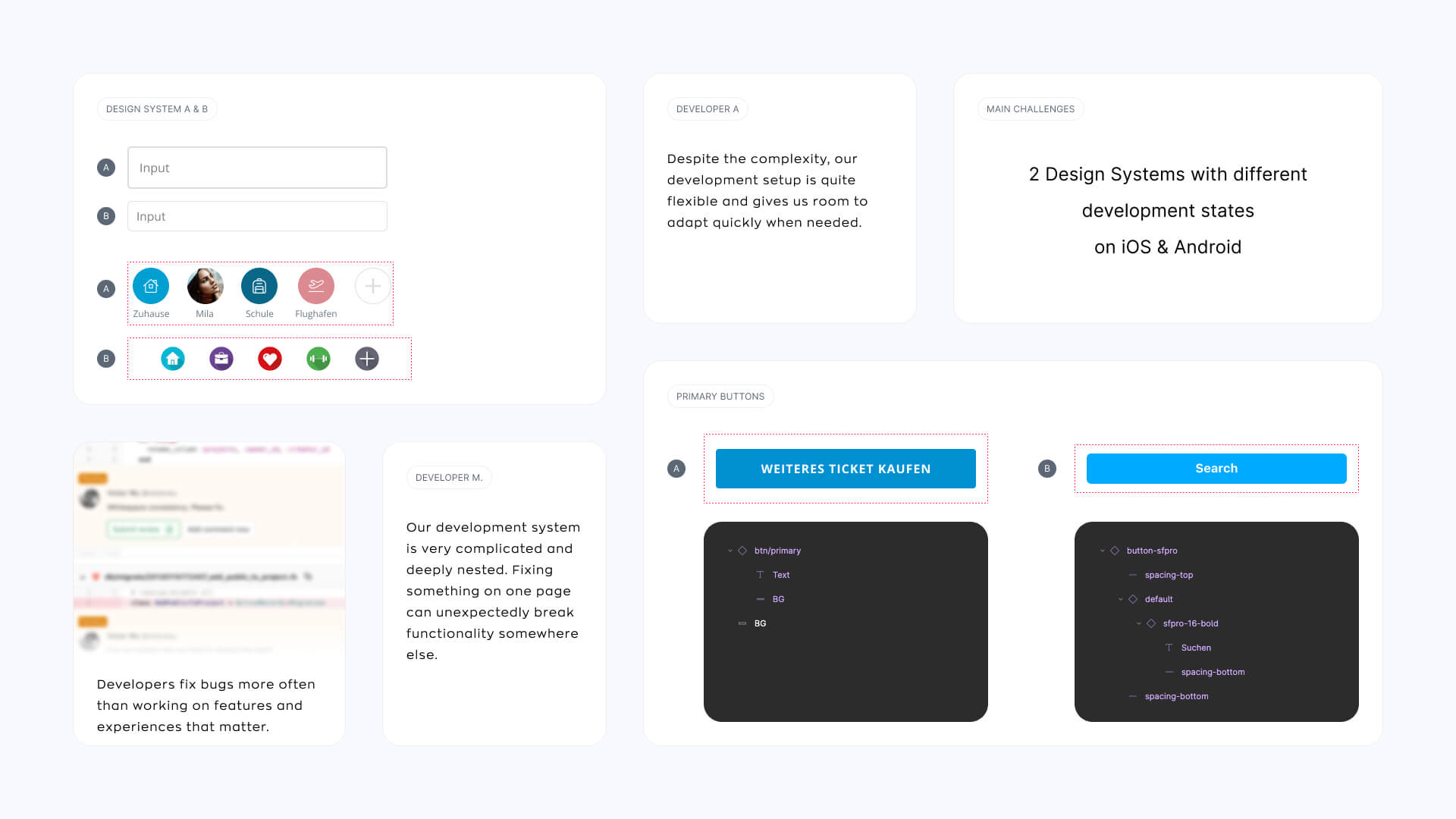
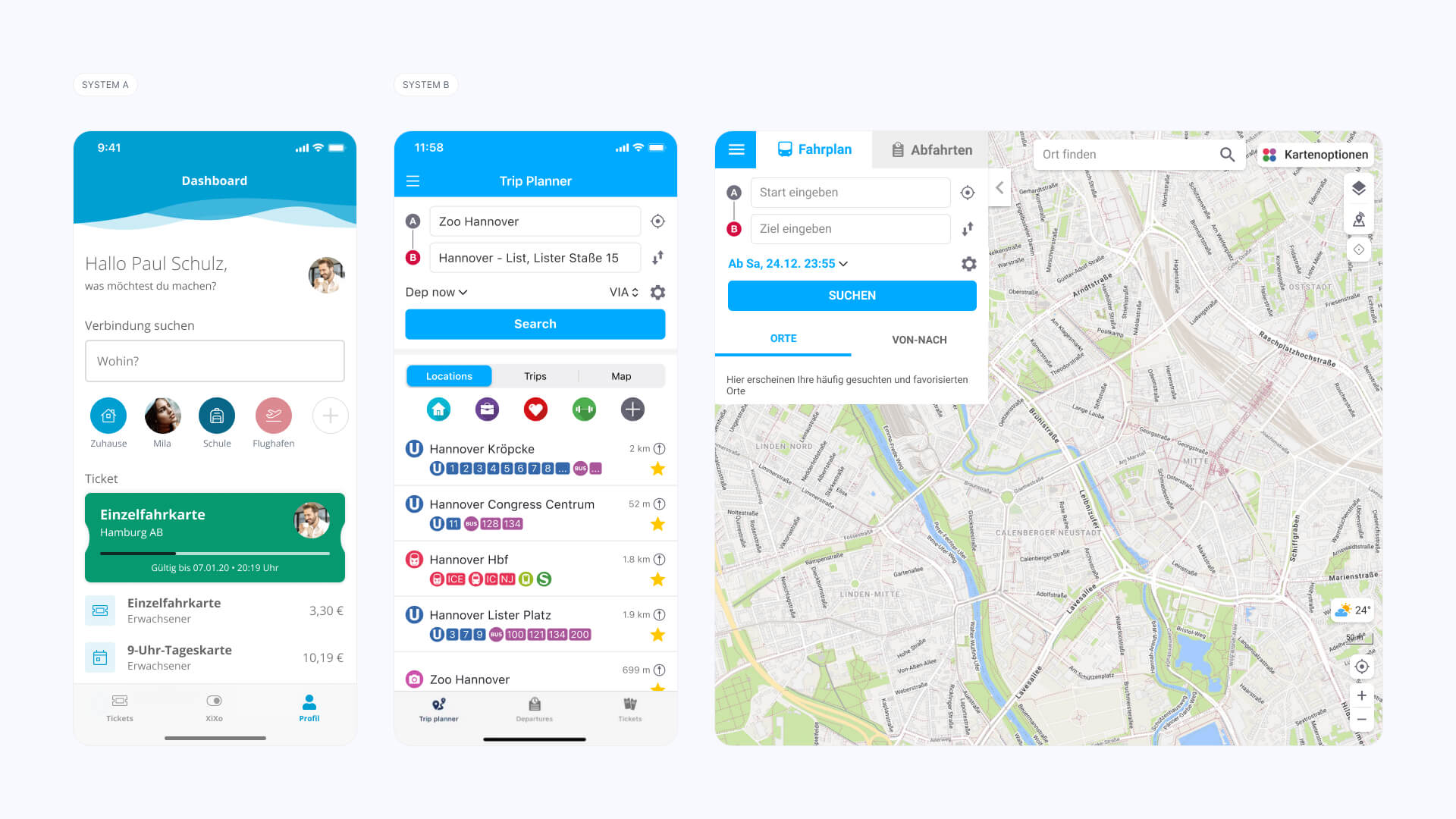
The MaaS platform faced UX inconsistencies, limited client customization, high maintenance costs, and accessibility gaps. We needed a unified design system to streamline client branding, reduce maintenance, and ensure consistent, accessible experiences across iOS, Android, and web platforms.
The Opportunity
We needed a unified, scalable design system to deliver consistent, accessible experiences, empower client customization, and reduce design and development effort across platforms.
More about the challenge
We needed a unified, scalable design system to deliver consistent, accessible experiences, empower client customization, and reduce design and development effort across platforms.
Identifying Core Challenges
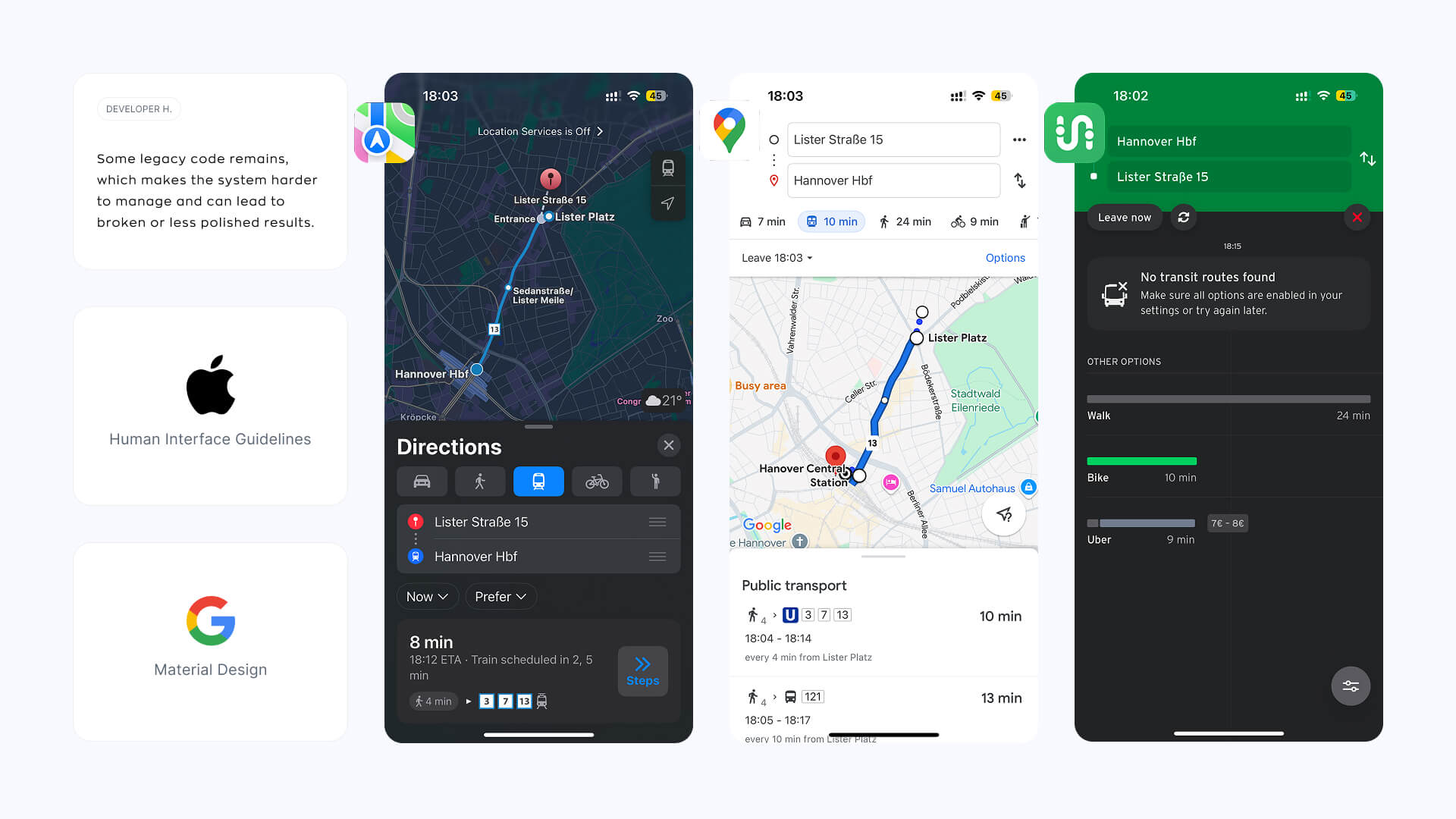
- Inconsistent UX Across Platforms
Variations in UI and interactions across iOS, Android, and web eroded user trust and made the experience feel disjointed. - Limited Client Customization
Without a flexible system, adapting the product to meet client branding needs required time-intensive design and development work. - High Maintenance Overhead
Duplicate design efforts and an unstructured component library made updates slow and costly. - Accessibility Gaps
Inconsistent implementation of accessibility standards risked excluding users and limited compliance with industry guidelines.
Research & Discovery
Understanding Client needs and Internal Teams (Devs, PM, QA, etc.)
We conducted client interviews, design audits, and desk research to understand customization needs and identify recurring patterns. Cross-functional collaboration helped us uncover workflow pain points. The insights confirmed the need for a flexible, accessible, and scalable design system to ensure consistency and ease of use for both clients and teams.
Key Insights
We needed a flexible, accessible, and scalable design system that simplified customization for clients while maintaining consistency and efficiency for internal teams.
More about Research & Discovery
What We Did
- Client Insights & Interviews
We consolidated years of client feedback and conducted interviews to understand what they truly wanted to customize. Every client had different priorities—ranging from branding to navigation structure. - Design Audits
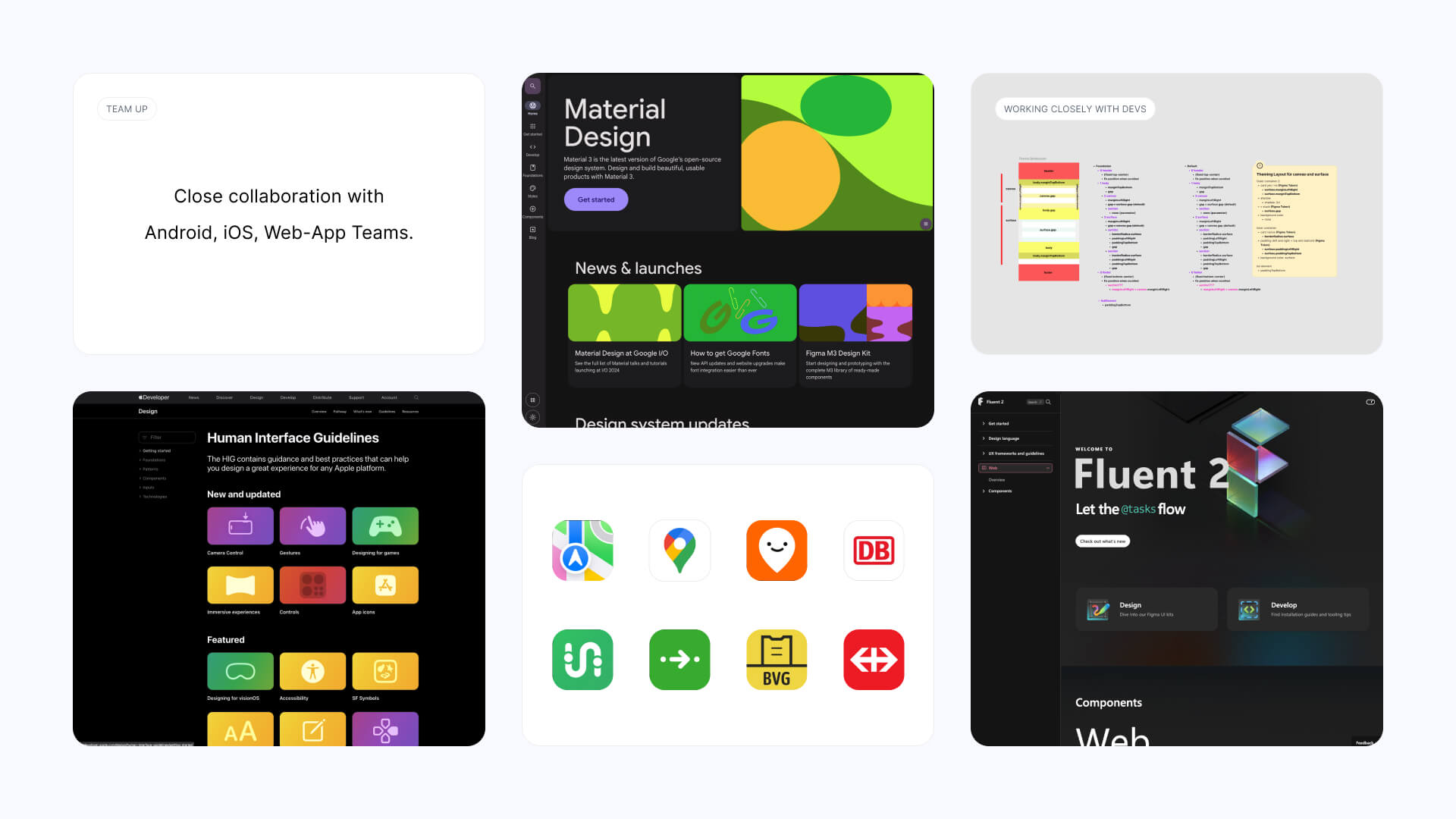
We analyzed current client implementations to spot patterns in customization, helping us identify the most frequently adapted components. - Desk Research
We benchmarked leading design systems and reviewed competitor apps to gather best practices on scalability, accessibility, and customization. - Cross-Functional Collaboration
We engaged stakeholders, developers, PMs, and QA teams to uncover workflow pain points and align on feasibility and priorities. - UX Consistency Mapping
To avoid duplicating similar patterns, we grouped buttons, forms, and common UI elements by shared behaviors. This ensured consistency in UX and simplified future maintenance.
Process
A Collaborative, Iterative Approach to Customization and Consistency
We adopted an iterative, cross-functional approach to create a design system balancing client flexibility with a consistent user experience. Key steps included aligning on design principles, merging existing systems, building flexible components, and validating the system internally. The core of the system was the boilerplate, empowering clients to customize easily.
Key Milestone
At the core of the system was the boilerplate—a ready-to-use foundation that streamlined development and empowered clients to easily implement their customizations.
More about design process
We took an iterative, cross-functional approach to develop a scalable design system that balanced client flexibility with a consistent user experience.
What We Did
- Design Principles
Aligned on scalability, customizability, consistency, and accessibility to guide all decisions. - System Foundations
Merged the existing Transit and Ticketing design systems into one unified, scalable, and accessible structure. - Boilerplate
Created a ready-to-use development foundation that streamlined implementation and empowered clients to easily apply their customizations. - Component Library
Built flexible components with customizable options—colors, typography, iconography—ensuring consistency across iOS, Android, and web. We didn’t recreate every component from scratch—platform-specific patterns on iOS and Android were preserved to maintain a familiar, native experience. - Collaboration & Validation
Worked closely with developers, PMs, and QA to ensure feasibility and smooth handoff. We also validated the system internally with a set of clients to test the customization workflows and get early feedback. - Tools and Methods
We used Figma for design and prototyping, FigJam for brainstorming, and Jira for project tracking. These tools fostered fast iteration and clear communication across teams.
Reflection
Strategic Insights & Key Learnings
Collaboration across teams was crucial for a system that addressed both business and technical needs. Early client testing and clear documentation sped up implementation. Balancing flexibility with consistency was key.
What I would do differently
Anticipating future needs and adding more customization options early would reduce future iterations.
More about my learnings
The development of this design system was an intensive process, but it provided valuable insights that will guide future projects.
Key Learnings
- Collaboration is Crucial
Cross-functional collaboration between design, development, and client-facing teams was key to creating a system that truly addressed both business and technical needs. - Iterative Testing is Essential
Validating early with a set of clients was invaluable. Their feedback helped refine the system and ensure it met real-world needs before full deployment. - Scalability Requires Flexibility
The balance between flexibility for clients and maintaining consistency across platforms is critical. It’s important to provide customization options without overcomplicating the implementation. - Documenting for Clarity Pays Off
Clear, well-structured documentation and a comprehensive component library were essential in reducing confusion and speeding up the implementation process for both internal teams and clients.
Ready to transform?
Let’s discuss how we can turn your challenges into the clarity that sets your product apart.
I’ve created solutions for